"No Mid-Game Rule Changes": BOOT Party Calls for Legal Certainty, Technological Transparency, and an Electoral Ombudsman Ahead of 2027 Elections
Updated on : Sunday, 15 February, 2026
Released on: Friday, 13 February, 2026
Read (372) |
Join BOOT Party
Tweet #VoteBOOTParty
The release of the 2027 General Election timetable by the Independent National Electoral Commission (INEC) has officially set Nigeria on course for another critical democratic exercise. The schedule is consistent with the provisions of the Electoral Act 2022, and in that regard, INEC has done the needful.
While discussions on possible amendments to the Electoral Act continue at the National Assembly, the 2027 General Elections must proceed strictly under the existing legal framework. Any amendment that eventually receives presidential assent should apply to future electoral cycles, not one already set in motion. As in any organised competition, the rules must not be altered after the game has begun. Legal certainty is fundamental to electoral credibility and stability.
INEC should therefore continue preparations for the 2027 General Elections firmly within the boundaries of the 2022 Electoral Act to avoid legal conflicts, operational confusion, or post-election disputes rooted in procedural ambiguity.
Party Readiness and Democratic Participation
The BOOT Party affirms its readiness for the 2027 General Elections. Across the country, many members have expressed interest in contesting various positions, reflecting growing political engagement within the party's ranks.
However, readiness goes beyond candidate selection. It involves strengthening party structures, promoting internal democracy, and ensuring that Nigerians are presented with credible and issue-driven alternatives.
Integrity in a "Zero-Trust" Society
No election can pass the integrity test beyond the integrity of its people and institutions. Barring unforeseen circumstances, there is no inherent reason INEC cannot successfully conduct the 2027 General Elections.
Yet Nigeria's socio-political climate has evolved into what can best be described as a "zero-trust" society—where public scepticism is high and electoral outcomes are frequently challenged in court, sometimes reaching the Supreme Court. As INEC becomes increasingly reliant on technology, public expectations for transparency and accountability also intensify.
The risk is not merely administrative failure but eroding confidence. Without proactive safeguards, election outcomes may increasingly face disputes, not solely because of malpractice, but because of perception gaps and trust deficits.
The "Black Box" Challenge and the Need for Oversight
Technology now plays a central role in Nigeria's electoral process, including voter accreditation and results collation systems such as BVAS and IReV. While these tools are designed to enhance transparency, they currently operate in an environment where there is limited independent third-party oversight.
This creates what some perceive as a "black box" scenario—where processes are technically complex but not sufficiently transparent to the public or political stakeholders.
The growing agitation for real-time transmission of results from a manual voting framework requires a carefully managed transformation from manual votes to electronically processed outcomes. Unfortunately, there is no clearly articulated national standard guiding this transformation. Too often, there is an implicit assumption that technology itself guarantees integrity. That assumption is flawed.
INEC's technological infrastructure—particularly systems used for accreditation and results collation—must be subjected to rigorous, independent third-level control audits. Transparent certification, public reporting, and institutionalised oversight mechanisms are essential to prevent what could be described as "scientific rigging" through technological manipulation.
A Call for an Electoral Ombudsman
To strengthen institutional confidence and safeguard the use of technology in elections, the BOOT Party calls for the establishment of an independent Electoral Ombudsman.
Such an office would serve as a neutral oversight authority responsible for reviewing, auditing, and monitoring the technological components of Nigeria's electoral process. The Ombudsman would not replace INEC but would complement it by providing independent scrutiny, resolving technical complaints, and ensuring compliance with clearly defined technological standards.
All technological transformations within the electoral process would be subject to review and approval by the Electoral Ombudsman, with the process conducted transparently and open to public scrutiny—particularly by independent experts who can examine, challenge, and validate such changes.
An Electoral Ombudsman would help bridge the trust gap between the electoral body, political parties, civil society, and the electorate. In a digital age where systems are complex and opaque to most citizens, independent oversight is no longer optional—it is essential.
The Information War and the AI Era
The greatest threat to the credibility of the 2027 elections may not be external hacking of INEC's systems. Rather, it may be the rapid spread of misinformation and artificially generated narratives capable of shaping public perception before verified facts can stabilise discourse.
Artificial intelligence tools can produce highly convincing but false content, amplifying distrust in an already sceptical environment. In such a climate, INEC's challenge will not only be technical competence but communication competence. Transparency must be proactive, not reactive.
Safeguarding 2027 and Beyond
As Nigeria prepares for 2027, three imperatives must guide the process:
1. Legal Stability — Conduct the elections strictly under the Electoral Act 2022.
2. Technological Accountability — Subject electoral technology to independent audits and structured oversight.
3. Institutional Transparency — Establish mechanisms such as an Electoral Ombudsman to reinforce public trust.
Democracy depends not only on voting but on confidence in how votes are counted and communicated. The 2027 General Elections present an opportunity not merely to conduct another electoral cycle, but to strengthen the foundations of Nigeria's democratic integrity for generations to come.
Yours sincerely,
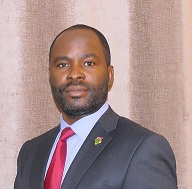
Sonny Adenuga
National Chairman
Because Of Our Tomorrow (BOOT) Party
@SonnyAdenuga
The BOOT Party is a cooperative-like political leadership system.
@TheBOOTParty
Send Feedback
WhatsApp: +234-705-774-9595
Signing up is free.
Join BOOT Party and Get Involved!
Download BOOT Party App to
Vote in BOOT Party Election Primaries
Donate Because Nigeria Matters
Signed
BOOT Party! @TheBOOTParty
Because Of Our Tomorrow
The BOOT Party is a cooperative-like political leadership system.
Send Feedback
WhatsApp: +234-705-774-9595
Signing up is free.
Join BOOT Party and Get Involved!
Download BOOT Party App to
Vote in BOOT Party Election Primaries
Donate Because Nigeria Matters